
How CGI Helps Secure Pre-Bookings and Communicate Ideas Clearly
In hospitality, timing matters almost as much as design. Long before a hotel refurbishment, event space upgrade or new interior concept is physically complete, commercial decisions are already being made. Sales teams need material for conversations with corporate clients. Investors want confidence in the direction of the project. Operators need to understand how the space will function. Internal stakeholders want reassurance that the design is commercially sound, visually appropriate and aligned with the brand.
That is where hospitality visualisation becomes so valuable.
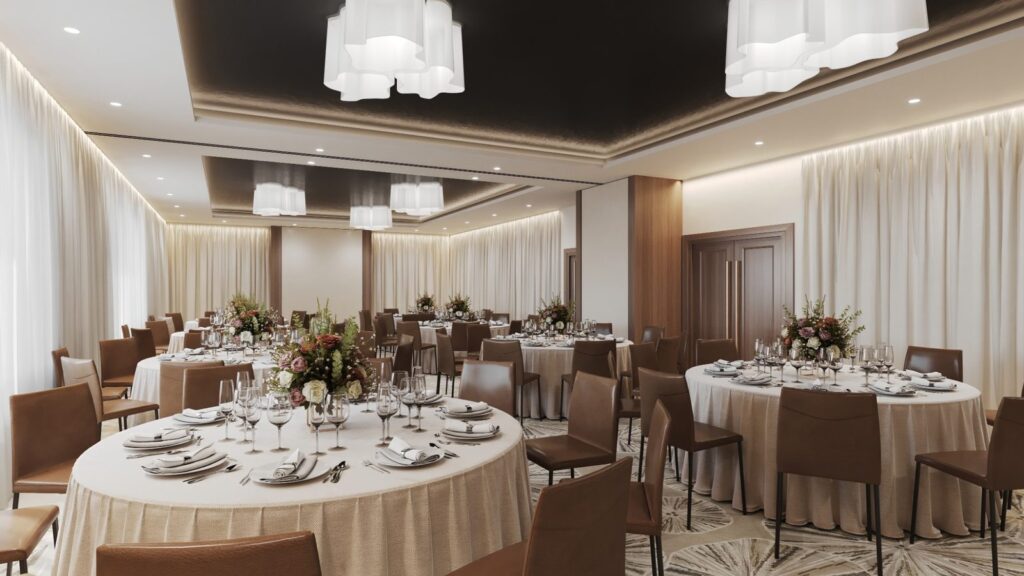
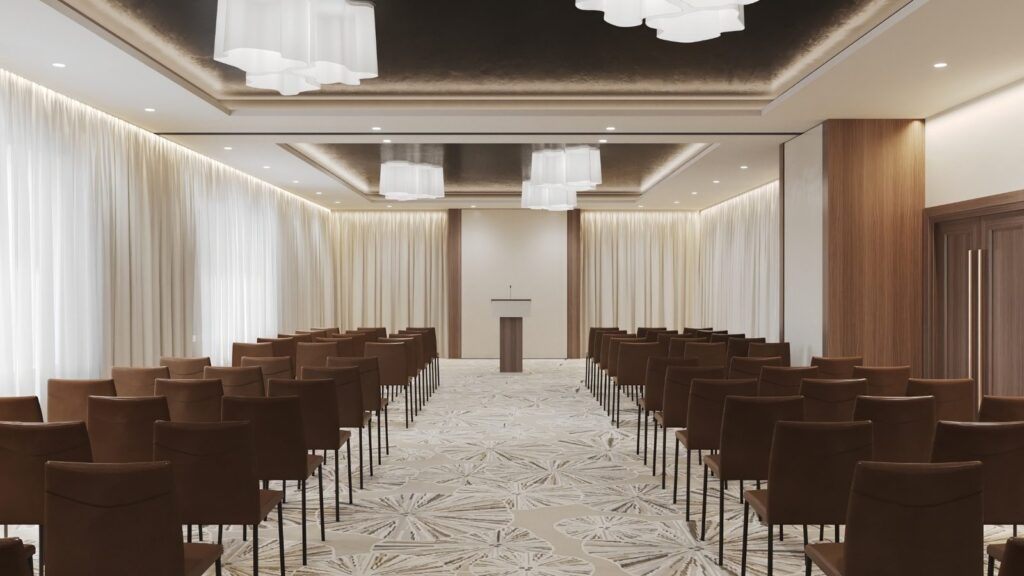
For this proposed new interior design concept for a Marriott Hotels in London, the aim was not simply to create attractive imagery. The visuals needed to communicate how the same space could support different uses, moods and guest expectations. One image showed the room arranged in a theatre-style format for presentations, talks or business events. The other showed the space dressed for a more intimate dining or function setup, helping to demonstrate flexibility, atmosphere and commercial potential.
This is one of the clearest examples of how CGI can go beyond presentation. When used well, hotel visualisation becomes a practical business tool. It helps hospitality brands sell a space before it is built, encourage pre-bookings, align stakeholders, and reduce uncertainty around key decisions.
Why Hospitality Visualisation Matters in Hotel Design
Hotels rarely sell just bedrooms. They sell experience, atmosphere, confidence and versatility. Meeting rooms, private dining areas, event spaces, lounges and restaurants all contribute to how a hotel is positioned in the market. They influence brand perception and play a direct role in revenue generation.
The challenge is that these spaces often need to be marketed and approved well before works are complete. A floorplan can explain dimensions. A finishes board can suggest tone and materials. Technical drawings can show compliance and layout. But none of these communicate the emotional and commercial potential of a hospitality space in the way CGI can.
High-quality hospitality visualisation bridges that gap. It turns a design proposal into something clients, operators and decision-makers can immediately understand. Instead of asking people to interpret drawings, it allows them to see the room as it is intended to feel.
That difference matters. A sales manager can send visuals to a prospective client considering a private event booking. A brand team can assess whether the interiors feel consistent with the hotel’s positioning. A project team can review furniture density, circulation space and lighting mood with greater confidence. An owner or investor can see the commercial quality of the concept rather than just its technical layout.
The Brief: Showing Different Setups Within One Proposed Interior
In this case, the visuals were created to show different potential setups for a proposed new interior scheme within a Marriott hotel in London. Rather than presenting the room in a single static arrangement, the imagery explored how the same design could perform in different operational scenarios.
One setup presented the room in a theatre format, with rows of seating focused on a lectern and presentation wall. This immediately positioned the space as suitable for meetings, conferences, presentations and business events. It showed order, clarity and a corporate hospitality feel. It also allowed stakeholders to assess the room’s scale, sightlines and sense of formality.
The second setup showed the space dressed for dining, with round tables, floral centrepieces, place settings and a softer event atmosphere. This shifted the reading of the room completely. The focus became hospitality, social use, private events and premium guest experience.
Together, the images did something very important: they demonstrated flexibility. In hospitality, flexibility is marketable. A room that can host daytime conferences and evening dining events is easier to sell internally and externally. It supports more booking opportunities, wider use cases and stronger return on investment.
Without CGI, that adaptability can be difficult to communicate. With CGI, it becomes instantly visible.
How CGI Helps Hotels Secure Pre-Bookings
One of the biggest advantages of hospitality CGI is that it allows hotels to start selling before a project is finished.
This is especially important for refurbished event spaces, new function rooms, private dining rooms or upgraded conference facilities. Waiting for professional photography after completion can mean waiting too long. Sales opportunities are often already in motion. Corporate clients may be planning events months in advance. Wedding and private event bookings can depend on having something polished to present at the enquiry stage. Group travel and meeting organisers want confidence in what they are buying.
When a hotel has strong visual material early, it can begin those conversations with far more credibility.
A CGI image helps a prospective client understand not just what the room is, but what their event could look like in it. That emotional leap is powerful. Instead of asking someone to imagine the finished result from a plan or a mood board, you are showing them a believable, finished vision. That makes the space easier to buy into.
For pre-bookings, this has several practical benefits.
First, it increases confidence. People are more likely to commit when they can see the standard, mood and layout of a proposed space.
Second, it improves marketing material. Sales brochures, pitch decks, landing pages, email campaigns and direct proposals all become stronger when supported by polished visuals.
Third, it helps differentiate the offer. In a competitive hospitality market such as London, presentation quality matters. If one venue can only describe a forthcoming space and another can show it clearly, the second has an obvious advantage.
Fourth, it shortens the sales conversation. Strong visuals answer questions before they are asked. They help prospective clients quickly understand capacity, layout style and overall quality.
In short, CGI helps turn an idea into something commercially usable much earlier in the process.
Helping Stakeholders Understand the Design Without Technical Drawings
Hospitality projects often involve a wide mix of stakeholders. Not all of them are design professionals. Some are focused on finance. Some on operations. Some on brand. Some on guest experience. Others may be external partners, consultants or decision-makers who simply do not read architectural material fluently.
That is where visualisation becomes such an effective communication tool.
A good hospitality CGI removes ambiguity. It gives everyone a shared reference point. Instead of discussing abstract ideas, the team is responding to something concrete. This improves clarity and often speeds up feedback.
For example, a stakeholder might struggle to interpret how warm timber panelling, soft drapery and layered lighting will feel when described verbally. Once shown in a CGI, the design direction becomes much easier to assess. The same applies to seating density, table spacing, access routes and focal points.
This is particularly useful in hotel environments, where commercial, aesthetic and operational concerns all overlap. A room may need to feel elegant, but also practical. It may need to look premium, but still work efficiently for staff and guests. CGI helps these conversations happen in a more grounded and productive way.
It also reduces the risk of misalignment. When people only have drawings or written descriptions, different stakeholders can imagine the finished result differently. By the time those differences are discovered on site, changes are more expensive and disruptive. CGI helps bring expectations together earlier.
Showing Versatility Is Often as Important as Showing Beauty
In hospitality, a beautiful image is useful. A beautiful image that also proves commercial flexibility is far more valuable.
The two visuals in this case study illustrate that well. The theatre setup communicates order, professionalism and event-readiness. The dining setup communicates atmosphere, refinement and guest experience. Together, they show that the same room can support multiple revenue streams.
This is a key point for hotel operators and stakeholders. A flexible space is easier to justify financially. It can adapt to seasonal demand, different customer types and changing operational needs. One day it may host a business seminar. The next, a private dinner. Later in the week, it might support a networking event, small wedding breakfast or internal brand function.
CGI allows this versatility to be shown without the cost or delay of staging multiple real-world photography shoots. It also allows the presentation of room setups that may not yet physically exist.
That makes visualisation especially useful during refurbishment, repositioning or soft-launch marketing. It allows a hotel to tell a fuller story about how the space will work and why it matters.
Supporting Hotel Marketing, Sales and Brand Presentation
Hospitality CGI is not only for design review. It can play a central role in sales and marketing.
Once created, visuals can be used across multiple channels. They can support website content, digital brochures, event sales PDFs, email campaigns, press material, stakeholder presentations, pitch decks and social media posts. They are particularly useful where a hotel wants to promote a future offer that is not yet complete.
For hotels in London, where competition is high and expectations are strong, having premium visual material can help maintain brand confidence during transition periods. If a space is being redesigned, upgraded or relaunched, CGI helps ensure the hotel still has something strong to show in the meantime.
There is also a brand consistency advantage. Photography depends heavily on timing, styling, lighting conditions and operational readiness. CGI allows far more control. A hotel can present the space exactly as intended, with the correct furniture, finishes, layout and atmosphere. That is useful when aligning the visual narrative with the wider brand.
For sales teams, this kind of consistency matters. It gives them clear material to work with and makes outreach more polished. It also helps avoid over-promising, because the imagery is developed directly from the design intent rather than assembled from reference shots or generic inspiration.
Reducing Risk Before Fit-Out and Final Delivery
Another major benefit of CGI is that it helps reveal issues before they become expensive.
A visualisation process often brings design questions to the surface early. Does the room feel too crowded in one setup? Are the furniture proportions right? Is there enough circulation space? Does the material palette feel warm enough? Is the lighting too flat, too formal or too cold? Does the room support the intended guest experience?
These are easier and cheaper questions to resolve before procurement and installation.
In this sense, hospitality visualisation is not just a marketing output. It is also part of the design development process. It allows teams to test ideas, refine the scheme and make more confident decisions before works are finalised.
For stakeholders, that can be reassuring. It shows a more considered approach and makes approvals easier. For designers and operators, it creates a chance to spot friction points early. For hotel brands, it helps protect the quality of the final guest-facing product.
Why Interior CGI Works So Well for Hospitality Spaces
Hospitality interiors are emotionally led environments. Guests may not analyse every finish or furniture decision consciously, but they absolutely notice how a space feels. Warmth, tone, comfort, lighting and composition all influence perception.
Because of that, hotel interiors benefit particularly well from CGI. Unlike technical visuals, high-end interior visualisation can communicate atmosphere as well as layout. It shows not only where things are, but what kind of experience the room is designed to create.
That is crucial in hotels, where design decisions often need to appeal to both operational logic and emotional response. A room should perform efficiently, but it should also feel welcoming, elevated and commercially desirable.
In this London Marriott concept, the visual language of the room plays a significant role. The warm timber detailing, soft neutral palette, draped perimeter, refined lighting and furniture layouts all contribute to a calm, premium and flexible hospitality feel. The images help stakeholders read that immediately.
Without CGI, those qualities are harder to communicate with the same impact.
The Commercial Value of Hospitality Visualisation
The value of hospitality visualisation goes beyond aesthetics. It helps hotels sell more clearly, communicate more effectively and make decisions earlier.
For pre-bookings, it provides material that supports advance sales conversations.
For stakeholders, it creates clarity and alignment.
For operators, it helps explain layout flexibility and practical use.
For designers, it becomes a tool for testing and refining the concept.
For marketing teams, it offers polished content before the space is complete.
And for brands, it helps present a confident, controlled vision of the future guest experience.
That combination is why CGI is now such an important part of hotel presentation and development. In a sector where perception, timing and commercial confidence all matter, strong visualisation is not a luxury. It is a strategic asset.
Conclusion
This proposed Marriott hotel interior concept in London shows exactly why hospitality visualisation is so effective. By presenting the same space in different setups, the CGI did more than show a design. It demonstrated flexibility, commercial potential and atmosphere. It created material that could support stakeholder discussions, strengthen early marketing and help future bookings begin before the project was physically complete.
For hotels, event spaces and hospitality brands, that is where CGI delivers real value. It helps turn an idea into something people can understand, support and buy into.
When a space needs to be approved, marketed or sold before completion, hospitality visualisation gives the project a clear voice. It makes proposals easier to trust, easier to share and far easier to imagine in use.
And in hospitality, where every booking starts with confidence, that can make all the difference.
